Knocked-Out Tooth Emergency

Knocked-out Tooth?

Here’s what to do before you visit our De Pere emergency dentist, and how to take care of your teeth after treatment.1

Don't Take Any Chances on Your Oral Health

Act Fast. Your Tooth May Still Be Saveable.

A knocked-out tooth is one of the few dental emergencies where the clock is genuinely ticking. The 30 to 60 minutes following the injury are the window that determines whether your natural tooth can be saved. How you handle the tooth in those first few minutes, and how quickly you reach a dental office equipped to reimplant it, makes all the difference. At Fox View Dental, Dr. Chad Yenchesky is experienced in the precise protocol for treating avulsed teeth and will see you immediately when this type of emergency occurs.

If your tooth has been knocked out, call our De Pere dental office right now at (920) 336-4201. Don’t stop to look anything up. Call first.

Why Timing and Dr. Chad’s Expertise Both Matter

The success of a reimplantation depends on two things: what happens in the first hour and the quality of the clinical care afterward. Dr. Yenchesky brings both sides of that equation to every emergency. His extensive training in restorative and implant dentistry, including completion of a comprehensive implant curriculum at the Resnik Implant Institute and over a decade of continuing education at institutions across the country, gives him a level of clinical command that extends well beyond general dentistry. He understands the mechanics of tooth reimplantation, the biology of healing, and the follow-up care needed to give your natural tooth the best chance of long-term survival.

And if reimplantation ultimately isn’t successful, Dr. Yenchesky is also one of De Pere’s most experienced implant dentists, meaning the path to restoring your smile doesn’t end with the emergency visit.
What Happens When a Tooth Is Knocked Out?

When a tooth is completely displaced from its socket, the event is called an avulsion. The tooth root is lined with periodontal ligament cells, which are living tissue that makes reimplantation possible. These cells begin dying within minutes of the tooth being exposed to air, which is why the two most critical variables in an avulsion emergency are time and storage medium. A tooth reimplanted within 30 minutes has a substantially higher success rate than one that sat dry on a countertop for an hour.

Knocked-out teeth can affect anyone. Children are particularly susceptible during contact sports and active play. Adults experience avulsions most often through car accidents, falls, workplace injuries, and athletic collisions. The tooth may come out fully intact or partially fractured, and the socket itself may or may not show signs of bone damage, something Dr. Yenchesky will assess immediately using digital imaging.

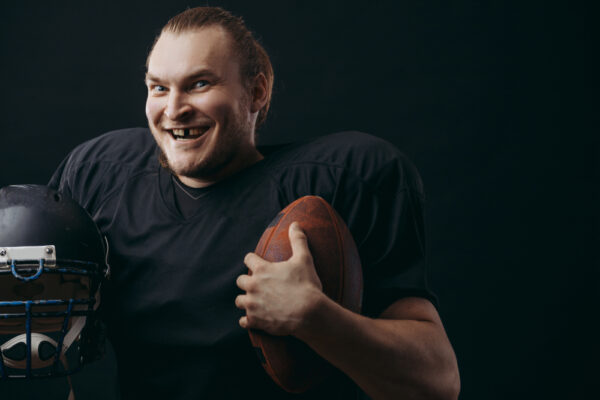
Football player smiling while holding a football and wearing a helmet, representing the risks of avulsions during contact sports.

What to Do As Soon As the Tooth Is Knocked Out

These steps, done correctly, give your tooth the best chance of survival until you reach our office:

Find the tooth and pick it up by the crown, the white part you can see when smiling. The root contains the periodontal ligament cells that make reimplantation possible, so handle it as little as possible and avoid touching the root at all. If the tooth is dirty, rinse it gently under cool, clean water or milk for no more than ten seconds. Don’t scrub it, don’t use soap, and don’t dry it with a cloth or paper towel. 

If you can, try to place the tooth back into the socket yourself. It should face the same direction it normally does. Bite softly on a piece of clean gauze or cloth to hold it in place. This is the best possible storage environment for the tooth while you travel to our office. 

If reinsertion isn’t possible, place the tooth in a container of milk. Milk is the preferred preservation medium because its pH and protein content help keep root cells viable. If milk isn’t available, the tooth can be stored between your cheek and gum. Plain water is a last resort only and should be avoided if alternatives exist. Get to Fox View Dental within 30 to 60 minutes. Call ahead at (920) 336-4201 so our team is ready when you arrive.

How We Treat a Knocked-Out Tooth

When you walk through our doors, Dr. Yenchesky and the team immediately get to work. There’s no lengthy intake process when you’re in a time-sensitive emergency. Here’s what to expect:

  1. Dr. Yenchesky begins with a rapid assessment using digital X-rays to evaluate the tooth, the socket, and the surrounding bone for any signs of fracture or additional damage. 
  2. The tooth and socket are gently cleaned to remove debris and bacteria before reimplantation is attempted. 
  3. If the tooth is viable, it’s carefully reinserted into the socket in its correct orientation and stabilized with a splint, a temporary brace that bonds the reimplanted tooth to the adjacent teeth while healing occurs. Splints are typically left in place for one to two weeks. 
  4. After stabilization, Dr. Yenchesky will prescribe antibiotics if indicated and schedule close follow-up visits to monitor the healing process. 

In most cases, a reimplanted tooth will require root canal therapy within one to two weeks of the injury. This is a standard and expected part of the process, not a sign that something went wrong. It’s performed to prevent infection and support long-term success.

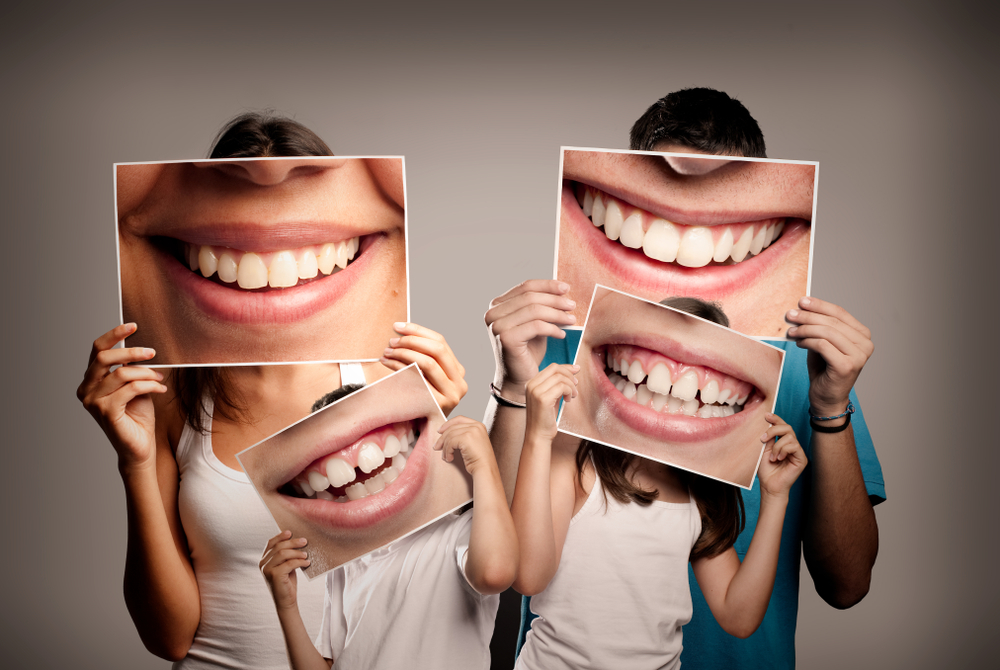
Group of people holding large photos of smiling mouths, showcasing healthy teeth, emphasizing dental health and smiles, relevant to emergency dental care information.

Common Causes of Knocked-Out Teeth

Avulsion injuries occur across a fairly predictable range of circumstances. 

  • Contact sports, including football, hockey, basketball, and martial arts, account for a significant share of knocked-out adult teeth. 
  • Vehicle accidents and falls are other frequent causes, particularly for adults. 
  • Physical altercations and workplace accidents round out the most common scenarios. 
  • Occasionally, biting unexpectedly hard food or objects can displace a tooth that was already compromised by decay or a failing restoration.

Wearing a properly fitted custom mouthguard is the single most effective way to prevent dental injuries during athletic activity, and it’s something Dr. Yenchesky can provide. 

What If the Tooth Can’t Be Saved?

Even with optimal handling and rapid care, not every knocked-out tooth can be successfully reimplanted. Teeth that were dry for too long, fractured extensively, or had preexisting structural compromise may not be candidates. When that’s the case, Dr. Yenchesky will discuss tooth replacement options with you once the acute phase has passed. Dental implants are the most realistic permanent option for replacing a single missing tooth and are something Fox View Dental is well-equipped to provide. A dental bridge is another option, depending on your specific situation, and Dr. Yenchesky will walk you through the trade-offs honestly so you can make an informed decision.

Meet Our Doctor

Dr. Chad Yenchesky, smiling dentist in a patterned shirt, owner of Fox View Dental, promoting restorative and cosmetic dentistry in Green Bay, Wisconsin.

Dr. Chad Yenchesky

Dr. Chad is no ordinary dentist.
He’s an extraordinary dentist!

As the owner of Fox View Dental, Dr. Chad Yenchesky—or Dr. Chad, as he is more commonly known—brings the best in digital dentistry to Green Bay and Northeast Wisconsin.

Known for his passionate pursuit of implant, restorative, cosmetic and sedation dentistry, loved for his fun and colorful personality, and respected for his active leadership in the national dental continuing education community, Dr. Chad brings a refreshing blend of knowledge and charisma to the chair. Patients especially appreciate his down-to-earth demeanor, relentless …

Call Our Team to Schedule Your Next Dental Exam

Fox View Dental – Patient Testimonial

Frequently Asked Questions

Save Your Smile at Fox View Dental

A knocked-out tooth is urgent, but it’s not hopeless if you move quickly. Dr. Chad Yenchesky and the Fox View Dental team are here to provide the fast, skilled, and compassionate care your situation demands. Located in De Pere and serving patients throughout the Green Bay area, including Allouez, Ashwaubenon, and Howard, call us immediately at (920) 336-4201. Every minute matters.

Menu